|
Showing posts with label market intelligence. Show all posts
Showing posts with label market intelligence. Show all posts
Friday, March 25, 2011
In the post recesssion era, where financial services providers are doing their best to retain current clients while seeking lucrative potential clients, Healthy 50+ Consumers have become a top priortiy.
 As a result of their level of educational achievement and higher professional and managerial employment rate, Healthy 50+ Consumers have higher incomes. And when compared to their peers in the same
age group, Healthy 50+ Consumers are more likely to have a household income of $100,000 or more.
As a result of their level of educational achievement and higher professional and managerial employment rate, Healthy 50+ Consumers have higher incomes. And when compared to their peers in the same
age group, Healthy 50+ Consumers are more likely to have a household income of $100,000 or more. Monday, January 3, 2011
Women dominating postsecondary ranks
Market Insights: A Selection From The Report
Bolstered by revenue safeguards such as federal food programs and student loans, K–12 and college foodservice has emerged as an industry bright spot expected to grow steadily over the next several years, according to The Education Foodservice Market in the U.S.: Elementary, Secondary and Higher Education by market research publisher Packaged Facts.
Women dominating postsecondary ranks
For fall 2008, 19.57 million students were enrolled at all Title IV postsecondary institutions. 18.97 million of these students were enrolled in a 4-year undergraduate program (48.0% of total enrollment), a graduate program (12.7% of total enrollment) or a 2-year program (36.3% of total enrollment).
Bolstered by revenue safeguards such as federal food programs and student loans, K–12 and college foodservice has emerged as an industry bright spot expected to grow steadily over the next several years, according to The Education Foodservice Market in the U.S.: Elementary, Secondary and Higher Education by market research publisher Packaged Facts.
Women dominating postsecondary ranks
For fall 2008, 19.57 million students were enrolled at all Title IV postsecondary institutions. 18.97 million of these students were enrolled in a 4-year undergraduate program (48.0% of total enrollment), a graduate program (12.7% of total enrollment) or a 2-year program (36.3% of total enrollment).
- Among the 9.39 million students enrolled in a 4-year undergraduate program, 7.42 million (or 79.0% of all 4-year undergraduates) were enrolled full time and 5.26 million (or 56%) were female.
- While graduate students were more evenly split between full-time and part-time status, some 61% of graduate students were female.
- 2-year institutions also enrolled a higher percentage of females, but about 59% of 2-year students were enrolled part time.
Wednesday, October 20, 2010
ITP Furnishings/Accessories/Toys Marketplace Transformed by Recession
Packaged Facts observes that the consumer ITP durables marketplace has morphed under the pressure of the difficult U.S. (and world) economies, since at least 2007. Although retail dollar growth was still positive in that year across all three of our ITP categories studied here – furnishings, essentially homebound; accessories, more portable; and toys of an astonishing range of types – changes were already in effect: Pre-recession, many marketers were entering new brands, or extending their established brands, into the lower reaches of the luxury price-tiers, and more obviously, into middle luxury – “mid-luxe” tiers.
 In the stroller segment of the accessories category, for example, marketers such as Newell Rubbermaid, having bought the sophisticated Japanese-made Aprica brand earlier in 2008, thus covered the under $200-$370 range more deeply, because the new acquisition complemented Newell’s popular Graco brand, priced up to $270. Also pre-recession, Phil&teds and UPPAbaby were both rolling out namesake brands with high-tech or elegant design features, at MSRPs topping out at the upper reaches of the mid-luxe tier, or at $600-$700.
Initially, these marketers may have viewed their price-positionings as shrewd competitive moves versus the $1,000-plus Bugaboos, Maclarens, Stokkes, and other strollers. Bugaboo, not content to be the mid-luxe specialists’ punching bag, introduced the Bugaboo Bee in 2007, listing it at $535.
There was also some accommodation of the value set, with extensions downward into the under-$200, and even under-$100, brackets; the low-end models were often lightweight umbrella strollers, but in any case, tended to show the design influences of higher-priced counterparts.
As the cost of fossil fuels skyrocketed, and consequently, the pricetags on groceries and manufactured goods also shot up; as the U.S. mortgage scandal unfolded; as unemployment rates rose; as the war in Iraq cost untold billions – some ITP durables marketers may have concocted their multi-price-tiered battle plans to double as hedges against a recession that did happen, after the fourth quarter 2008 crashes of financial exchanges around the globe.
In 2010, there is plenty of anecdotal evidence that high-end ITP durables -- for instance, the Teutonia brand of German-made strollers acquired by Newell Rubbermaid in 2007, and now priced up to $890 -- are selling well again. But the newly reinforced mid-luxe and value tiers will be with us for a long time to come, offering wider arrays of brands, and certainly, more choices of affordable status brands.
Initially, these marketers may have viewed their price-positionings as shrewd competitive moves versus the $1,000-plus Bugaboos, Maclarens, Stokkes, and other strollers. Bugaboo, not content to be the mid-luxe specialists’ punching bag, introduced the Bugaboo Bee in 2007, listing it at $535.
There was also some accommodation of the value set, with extensions downward into the under-$200, and even under-$100, brackets; the low-end models were often lightweight umbrella strollers, but in any case, tended to show the design influences of higher-priced counterparts.
As the cost of fossil fuels skyrocketed, and consequently, the pricetags on groceries and manufactured goods also shot up; as the U.S. mortgage scandal unfolded; as unemployment rates rose; as the war in Iraq cost untold billions – some ITP durables marketers may have concocted their multi-price-tiered battle plans to double as hedges against a recession that did happen, after the fourth quarter 2008 crashes of financial exchanges around the globe.
In 2010, there is plenty of anecdotal evidence that high-end ITP durables -- for instance, the Teutonia brand of German-made strollers acquired by Newell Rubbermaid in 2007, and now priced up to $890 -- are selling well again. But the newly reinforced mid-luxe and value tiers will be with us for a long time to come, offering wider arrays of brands, and certainly, more choices of affordable status brands.
Tuesday, September 28, 2010
Chicago breakfast café opening - Atlanta Business Chronicle

Packaged Facts predicts breakfast sales will reach $37 billion in 2010 and $37.7 billion in 2011.
“While these figures may appear tepid at first glance, when viewed against the backdrop of lower overall restaurant sales, the breakfast day part has fared relatively well, taking share from the lunch and (especially) dinner day parts,” the report said.
Read more: Chicago breakfast café opening - Atlanta Business Chronicle
Chicago breakfast café opening - Atlanta Business Chronicle
Friday, September 24, 2010
Pet Supplies and Pet Care Products: The U.S. Market and a Global Perspective
Even as the economic picture improves, consumers remain cautious about spending, including in terms of the pet products they buy. Having lived up to its “recession-resistant” reputation once again, the business therefore continues to face challenges that have retailers, marketers and product developers relying more heavily than ever before on the all-important notion of pets as family. Accordingly, themes including health, function, comfort, safety, gifting, travel, and yes pet pampering are all weighing heavily on the value scale as market participants look to strike the perfect balance in pet categories across the board.
 Tapping into Packaged Facts’ extensive pet market report collection and analyst expertise, Pet Supplies and Pet Care Products in the U.S., 8th Edition: Pet Health and Pampering: The New Value Equation provides detailed market breakouts and insights not available elsewhere. Covering non-food pet supplies of all types and for all companion animal types, the report examines trends in flea/tick care products, cat litter, toys, rawhide chews, bedding, grooming products, supplements, clean-up products and many other product segments. Using 2009 as the base year, it charts sales since 2005 and forecasts sales through 2014; breaks the market out by animal type and product category in both the mass-market and pet specialty channels; presents dollar sales and market share for leading marketers and brands; analyzes competitive strategies and shifts; profiles top companies and market innovators; analyzes new product trends; and provides demographic and psychographic profiles of product purchasers.
More Information>>

More Information>>
Food Flavor and Ingredients Outlook 2010, 7th Edition

- International Flavors
- Redefining Healthy Eating
- Local Food Production and Sourcing
- Reenacted Flavors
- Savory Trends
- Sweet Trends


Thursday, September 23, 2010
Ice Cream and Frozen Desserts in the U.S.: Markets and Opportunities in Retail and Foodservice, 6th Edition

More Information>>
Tuesday, September 21, 2010
NEW Proprietary Data: The U.S. Foodservice Landscape 2010: Restaurant Industry and Consumer Trends, Momentum and Migration

Highlights of the study include:
1) directional consumer behavioral and attitude analysis via Packaged Facts’ proprietary Consumer Restaurant Outlook Tracker, which identifies the consumers who will lead near-term foodservice growth;
2) Via its Consumer Restaurant Usage and Spend Tracker, unique analysis of meal usage by restaurant type, party size, and party spend, to help target consumers who can bring in higher guest check averages;
3) Share of Stomach sales analysis that trends foodservice sales by segment against its retail counterpart, and provides quarterly same-store comparable trends and guest traffic frequency trends for more than 50 restaurant brands by segment—all of which provide a thorough sense of where the industry is heading; and
4) current and future menu pricing strategies and detailed consumer brand affiliations, to provide competitive insight.
More Information>>
Snack and Dessert Trends
Packaged Facts forecasts a 0.7% sales decline at limited-service restaurants in 2010, the result of extremely aggressive price discounting strategies that place guest traffic growth before guest check growth (a strategy in which snacks have played a role).
More>
More>
Sunday, September 19, 2010
U.S. Pet Market Outlook 2010-2011: Tapping into Post-Recession Pet Parent Spending
As the U.S. economy moves out of recession and into recovery, the purse strings of many pet parents will loosen, but shoppers will continue to demand greater value in the pet products and services they purchase as well as from the channels they shop. U.S. Pet Market Outlook 2010-2011: Tapping into Post-Recession Pet Parent Spending provides essential insights into the U.S. pet market overall as well as each of its four core categories: veterinary services, pet food, non-food pet supplies, and non-medical pet services (grooming, boarding, training, etc.).
 Benefiting from many current trends and “future factors,” the market will rise from $53 billion in 2009 to over $70 billion in 2014, the report forecasts, with strong demand for products and services that both enhance pet health and pamper lifting many boats as pent-up pet parent demand begins to kick in during 2010.
Continuing the market tracking and forecasting of the previous edition of Packaged Facts’ annual report (see U.S. Pet Market Outlook 2009-2010: Surviving and Thriving in Challenging Economic Times— http://www.packagedfacts.com/prod-toc/Pet-Outlook-Surviving-2154192/), the 2010-2011 edition projects sales, market growth drivers, and competitive and marketing opportunities. In a new focus discussion, it details...
More Information>>

Continuing the market tracking and forecasting of the previous edition of Packaged Facts’ annual report (see U.S. Pet Market Outlook 2009-2010: Surviving and Thriving in Challenging Economic Times— http://www.packagedfacts.com/prod-toc/Pet-Outlook-Surviving-2154192/), the 2010-2011 edition projects sales, market growth drivers, and competitive and marketing opportunities. In a new focus discussion, it details...
More Information>>
Saturday, September 18, 2010
Cheese: Natural and Specialty Cheeses in the U.S. and Global Markets

More Information>>
Friday, September 17, 2010
Coffee and Ready-to-Drink Coffee in the U.S.: The Market and Opportunities in Retail and Foodservice, 6th Edition
 |
| McDonald's McCafe |
Packaged Facts’ Coffee and Ready-to-Drink Coffee in the U.S.: The Market and Opportunities in Retail and Foodservice, 6th Edition offers a comprehensive look at this $47.5 billion market, examining both the retail and foodservice sides of the business as well as the growing overlap of the two. On the retail...
More Information>>
Gluten-free has gone big time, but why so popular?
09/16/2010 - Michael Hill - Associated Press
 |
This July 5, 2005 file photo shows gluten-free products on
display at a Hannaford Supermarket in Albany, N.Y. U.S.
sales of gluten-free food has more than doubled
since 2005 to over $1.5 billion, according to the market research
company Packaged Facts. And the growth spurt
is expected to continue at least through 2012.
(AP Photo/Jim McKnight, FILE)
|
Gwyneth Paltrow gushes over gluten-free. Chelsea Clinton's wedding cake was baked without it. The new Old Spice guy avoids the ubiquitous protein to help stay buff. In fact, odds are good you too have tried — or at least encountered — a product with the gluten removed.
Because gluten-free is what low-carb was a decade ago: The "it" diet discussed on daytime talk shows, promoted by hyper-slim actresses and adopted by masses. Grocery aisles are stocked with the likes of gluten-free pasta, crackers, cereal and beer.
Americans are enthusiastically exiling a dietary staple that wasn't even in most people's vocabulary a decade ago.
But why?
Unlike some other dietary boogeymen like trans-fats, gluten is not inherently bad to eat. Only a small percentage of people can't tolerate the protein, which occurs naturally in wheat, barley and rye. Plus, banning gluten from your diet can be really hard.
Not only is gluten an essential element of traditional breads and pastas (it's the protein that gives them their structure), it often is used as a thickening agent in processed foods, such as ketchup and ice cream. And cutting out gluten is no guarantee of weight loss.
Tuesday, September 14, 2010
US low-sodium product launches soar – but consumers go for taste

The US has launched more products claiming low or no sodium than any other country in the past three years, according to a new report from Packaged Facts – but consumers still prioritize good taste.
The US Department of Agriculture has estimated that the average American gets about 4,000mg of sodium a day, well above the recommended daily maximum of 2,300mg. Excessive sodium intake has been linked to increased risk of high blood pressure, heart disease and stroke. And with an estimated 75 percent of sodium in the average US diet coming from packaged foods, industry is already under pressure to reformulate foods to contain less sodium.
However, Packaged Facts claims that reducing sodium intake is not at the top of consumers’ list of priorities for dietary change. The market research organization said that low-sodium is not as important to consumers’ healthy eating agendas as eating more fruit and vegetables, more fiber or limiting saturated fat, sugar and trans fat. Nevertheless, “if good-tasting, lower-sodium options are offered, consumers will buy them,” it said, as consumers are interested in eating healthier foods overall.
Sodium reduction poses many challenges for manufacturers, including functionality as a leavening agent or preservative, as well as consumers’ flavor preference. But there is still huge momentum in the industry to reduce sodium.
More>
Low- and No-Sodium Foods and Beverages in the U.S.
Monday, September 13, 2010
Hispanic Food and Beverages
Hispanic Food and Beverages in the U.S.: Market and Consumer Trends in Latino Cuisine, 4th Edition : Packaged Facts
Burritos, enchiladas, quesadillas—you don’t have to go to Mexican restaurant or scour the ethnic foods aisle in your supermarket if that’s what you’re in the mood for. Hispanic foods and beverages have become so common a part of the American menu many consumers would have to think twice before characterizing them as a distinct ethnic cuisine. Are there any food courts in sports venues these days that don’t offer nachos as standard fare alongside hotdogs? Is there a supermarket or grocery anywhere in the country that doesn’t carry tortilla chips and salsa, even if there are no Hispanic consumers in their community?
With Hispanic foods and beverages achieving such prominence, it’s no wonder that sales were close to $7 billion in 2009, according to the recent report from Packaged Facts titled “Hispanic Food and Beverages in the U.S.: Market and Consumer Trends in Latino Cuisine, 4th Edition. This represented an increase of 28.7% from $5.4 billion in 2005. In addition, Packaged Facts predicts continued aggressive growth through 2014, with sales projected to top $9.5 billion in 2014.
The report details how the expanding appetite for Hispanic food and drink among non-Hispanic Americans combined with the rapid increase in the Hispanic population is driving sales of Mainstream Mexican products along with Authentic Hispanic and Nuevo Latino foods. Expanding distribution channels, the rise of the “foodie” and other key trends affecting the marketplace are described along with the changing demographics and other factors driving growth. In addition, the report profiles major marketers, both in the manufacturing and foodservice arenas.
Burritos, enchiladas, quesadillas—you don’t have to go to Mexican restaurant or scour the ethnic foods aisle in your supermarket if that’s what you’re in the mood for. Hispanic foods and beverages have become so common a part of the American menu many consumers would have to think twice before characterizing them as a distinct ethnic cuisine. Are there any food courts in sports venues these days that don’t offer nachos as standard fare alongside hotdogs? Is there a supermarket or grocery anywhere in the country that doesn’t carry tortilla chips and salsa, even if there are no Hispanic consumers in their community?
With Hispanic foods and beverages achieving such prominence, it’s no wonder that sales were close to $7 billion in 2009, according to the recent report from Packaged Facts titled “Hispanic Food and Beverages in the U.S.: Market and Consumer Trends in Latino Cuisine, 4th Edition. This represented an increase of 28.7% from $5.4 billion in 2005. In addition, Packaged Facts predicts continued aggressive growth through 2014, with sales projected to top $9.5 billion in 2014.
The report details how the expanding appetite for Hispanic food and drink among non-Hispanic Americans combined with the rapid increase in the Hispanic population is driving sales of Mainstream Mexican products along with Authentic Hispanic and Nuevo Latino foods. Expanding distribution channels, the rise of the “foodie” and other key trends affecting the marketplace are described along with the changing demographics and other factors driving growth. In addition, the report profiles major marketers, both in the manufacturing and foodservice arenas.
Friday, September 10, 2010
Food service lunch spending forecast to rise
FoodBusinessNews.net, September 8, 2010
by Keith Nunes
____________________
Consumer spending on lunch served in restaurants is forecast to rebound 2% in 2011 and reach $114 billion following two years of recession-related declines, according to “Lunch Trends in the U.S. Foodservice Market,” a report produced by research publisher Packaged Facts. After rising to $119 billion in 2008, lunch daypart sales declined 4% in 2009, and sales are projected to fall another 3% in 2010 to $112 billion.
“This has been a very tough climate for lunch food service and its counterparts, and that won’t change overnight although change is coming," said Don Montuori, publisher of Packaged Facts. “Growth in the lunch daypart still faces a few near-term challenges, including the impact of unemployment on work-driven restaurant routines, bargain-minded consumers who weigh the cost of a bagged lunch against the indulgence of eating out, and an industry environment in which players are chasing foot traffic at the expense of guest check through the extreme push of value meal deals.”
A survey of consumers conducted by Packaged Facts showed that interest in lunchtime meals priced under $5 and under $10 is stable across household income brackets, suggesting price sensitivity among a large segment of diners regardless of their personal wages. Respondents aged 18 to 24 are 60% more likely than average to choose a restaurant because it offers meals for under $3.
Limited time offers and menu options that allow consumers to bundle their meal components for a set price are two menu strategies that have proven attractive to consumers, according to Packaged Facts. Examples cited in the report include Taco Bell’s $2 Meal Deal and Jack in the Box’s Pick 3 for $3 customizable limited time offer value meal.
______________________
Read Food Business News Article
by Keith Nunes
____________________
Consumer spending on lunch served in restaurants is forecast to rebound 2% in 2011 and reach $114 billion following two years of recession-related declines, according to “Lunch Trends in the U.S. Foodservice Market,” a report produced by research publisher Packaged Facts. After rising to $119 billion in 2008, lunch daypart sales declined 4% in 2009, and sales are projected to fall another 3% in 2010 to $112 billion.
“This has been a very tough climate for lunch food service and its counterparts, and that won’t change overnight although change is coming," said Don Montuori, publisher of Packaged Facts. “Growth in the lunch daypart still faces a few near-term challenges, including the impact of unemployment on work-driven restaurant routines, bargain-minded consumers who weigh the cost of a bagged lunch against the indulgence of eating out, and an industry environment in which players are chasing foot traffic at the expense of guest check through the extreme push of value meal deals.”
A survey of consumers conducted by Packaged Facts showed that interest in lunchtime meals priced under $5 and under $10 is stable across household income brackets, suggesting price sensitivity among a large segment of diners regardless of their personal wages. Respondents aged 18 to 24 are 60% more likely than average to choose a restaurant because it offers meals for under $3.
Limited time offers and menu options that allow consumers to bundle their meal components for a set price are two menu strategies that have proven attractive to consumers, according to Packaged Facts. Examples cited in the report include Taco Bell’s $2 Meal Deal and Jack in the Box’s Pick 3 for $3 customizable limited time offer value meal.
______________________
Read Food Business News Article
Novel fibers to grow 750% as consumers seek fiber-rich foods
By Stephen Daniells, 10-Sep-2010, Nutra Ingredients
 The use of novel fibers in food products is set to sky-rocket over the next few years, with growth of 750 percent predicted, according to a new report from Packaged Facts.
Consumer interest in dietary fiber has been growing with scientific studies linking increased intake to reduced risks of cancers such as colorectal and cardiovascular disease, digestive health benefits and weight management.
A 2008 International Food Information Council survey found 77 percent of people are proactively trying to consume additional fiber.
Despite such good intentions, however, many Americans only achieve about 50 percent of their recommended amount of 25 to 30 grams of fiber daily.
And such stats are driving the introduction of new fiber-fortified food and beverage products, according to a new report Fiber Food Ingredients in the U.S.: Soluble-, Insoluble- and Digestive-Resistant Types by market research publisher Packaged Facts.
While interest in all types of fibers – insoluble and soluble – is expected to increase, the biggest growth is expected for so-called novel fibers. Packaged Facts defined novel fiber as “one that has not historically been viewed as a fiber food ingredient. This includes, but is not limited to inulin, FOS, GOS, resistant maltodextrin and soluble corn fiber.”
“Packaged Facts determined that sales of all fiber food ingredients (i.e., conventional, insoluble-type fibers; conventional, soluble-type fibers; and novel fiber food ingredients) will continue to increase indefinitely, as the market for fiber-enhanced foods is still in its infancy,” said Don Montuori, publisher of Packaged Facts.
“There is a great deal of room for growth across almost all food categories, which presents an opportunity for the many different fiber ingredients that are among the most popular with today’s food formulators,” added Montouri.
Novel growth
The market researcher is predicting a significant growth for these novel fibers, with the category predicted to increase its share of the market by more than 750 percent, jumping 35 percentage points from an almost 5 percent share in 2004 to a 39 percent share in 2014.
Packaged Facts estimates that in 2004, 91 percent of all fiber food ingredient sales were of conventional, insoluble-type fibers, which contains cellulose, hemicellulose and lignin and cannot be dissolved in water.
The remaining 9 percent share was split evenly between conventional, soluble-type fibers and emerging, novel fibers. The market researcher projects that insoluble fibers will decrease to 53.3 percent by 2014, while the share for the mostly new or newly refined conventional, soluble-type fibers will decrease slightly to 7.4 percent.
Soluble versus insoluble
Studies have also reported that insoluble fiber may reduce the risk of obesity and diabetes, but the biological mechanism underlying the benefits has only been assumed.
The assumption was that the fiber reduced the glycemic response (a rise in blood glucose), thereby increasing satiety and decreasing energy intake. A lower glycemic response decreases the demand for insulin, therefore reducing the risk of type 2 diabetes.
In Europe and Japan, soluble fiber has the greater market share than insoluble. In the US, where the entire fiber market was worth $192.8m (€151.0m) in 2004, insoluble fiber dominates the market with $176.2m (€138.0m), and $16.6m (€13.0m) soluble.
But while Frost and Sullivan predicts overall growth in the US to $470m (€369m) by 2011, the soluble fiber sector is expected to increase by almost twice the compound annual growth rate (CAGR) compared to insoluble fiber - 26.3 percent compared to 13.1 percent.
The arrival of multinationals
Data from Datamonitor in 2009 indicated that food manufacturers are increasingly adding fiber to their products, in a move described as going “back to basics”.
The market researcher said fiber has become an ingredient of choice for products targeting health conscious consumers and products designed to help combat obesity.
Based on data from its Product Launch Analytics, which tracks new products entering the global marketplace, Datamonitor said the percentage of new food products launched in the US that claim to be high in fiber hit 6.3 percent in 2008, up from 5.2 percent in 2006.
“Consumers have long known that fiber is ‘good for you.’ Now food makers are redoubling their efforts to increase the fiber content of many popular food products,” said Datamonitor.
Companies that have launched products touting their fiber content include the multinationals PepsiCo, Kraft, Campbell Soup, Kellogg and Dannon.
More>

Consumer interest in dietary fiber has been growing with scientific studies linking increased intake to reduced risks of cancers such as colorectal and cardiovascular disease, digestive health benefits and weight management.
A 2008 International Food Information Council survey found 77 percent of people are proactively trying to consume additional fiber.
Despite such good intentions, however, many Americans only achieve about 50 percent of their recommended amount of 25 to 30 grams of fiber daily.
And such stats are driving the introduction of new fiber-fortified food and beverage products, according to a new report Fiber Food Ingredients in the U.S.: Soluble-, Insoluble- and Digestive-Resistant Types by market research publisher Packaged Facts.
While interest in all types of fibers – insoluble and soluble – is expected to increase, the biggest growth is expected for so-called novel fibers. Packaged Facts defined novel fiber as “one that has not historically been viewed as a fiber food ingredient. This includes, but is not limited to inulin, FOS, GOS, resistant maltodextrin and soluble corn fiber.”
“Packaged Facts determined that sales of all fiber food ingredients (i.e., conventional, insoluble-type fibers; conventional, soluble-type fibers; and novel fiber food ingredients) will continue to increase indefinitely, as the market for fiber-enhanced foods is still in its infancy,” said Don Montuori, publisher of Packaged Facts.
“There is a great deal of room for growth across almost all food categories, which presents an opportunity for the many different fiber ingredients that are among the most popular with today’s food formulators,” added Montouri.
Novel growth
The market researcher is predicting a significant growth for these novel fibers, with the category predicted to increase its share of the market by more than 750 percent, jumping 35 percentage points from an almost 5 percent share in 2004 to a 39 percent share in 2014.
Packaged Facts estimates that in 2004, 91 percent of all fiber food ingredient sales were of conventional, insoluble-type fibers, which contains cellulose, hemicellulose and lignin and cannot be dissolved in water.
The remaining 9 percent share was split evenly between conventional, soluble-type fibers and emerging, novel fibers. The market researcher projects that insoluble fibers will decrease to 53.3 percent by 2014, while the share for the mostly new or newly refined conventional, soluble-type fibers will decrease slightly to 7.4 percent.
Soluble versus insoluble
Studies have also reported that insoluble fiber may reduce the risk of obesity and diabetes, but the biological mechanism underlying the benefits has only been assumed.
The assumption was that the fiber reduced the glycemic response (a rise in blood glucose), thereby increasing satiety and decreasing energy intake. A lower glycemic response decreases the demand for insulin, therefore reducing the risk of type 2 diabetes.
In Europe and Japan, soluble fiber has the greater market share than insoluble. In the US, where the entire fiber market was worth $192.8m (€151.0m) in 2004, insoluble fiber dominates the market with $176.2m (€138.0m), and $16.6m (€13.0m) soluble.
But while Frost and Sullivan predicts overall growth in the US to $470m (€369m) by 2011, the soluble fiber sector is expected to increase by almost twice the compound annual growth rate (CAGR) compared to insoluble fiber - 26.3 percent compared to 13.1 percent.
The arrival of multinationals
Data from Datamonitor in 2009 indicated that food manufacturers are increasingly adding fiber to their products, in a move described as going “back to basics”.
The market researcher said fiber has become an ingredient of choice for products targeting health conscious consumers and products designed to help combat obesity.
Based on data from its Product Launch Analytics, which tracks new products entering the global marketplace, Datamonitor said the percentage of new food products launched in the US that claim to be high in fiber hit 6.3 percent in 2008, up from 5.2 percent in 2006.
“Consumers have long known that fiber is ‘good for you.’ Now food makers are redoubling their efforts to increase the fiber content of many popular food products,” said Datamonitor.
Companies that have launched products touting their fiber content include the multinationals PepsiCo, Kraft, Campbell Soup, Kellogg and Dannon.
More>
Friday, September 3, 2010
Consumer Interest in Health, Convenience and Localism Fuel $16 Billion U.S. Market for Fresh Baked Goods
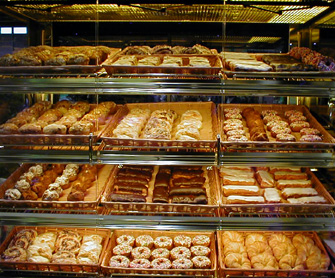
Total fresh baked goods sales experienced slow but steady growth in the 2%-4% range throughout the 2005-2009 period, with the exception of 2008 when the market saw almost 6% growth. Fresh baked goods sales from in-store bakeries including those of warehouse clubs also experienced steady growth, in the 2%-5% range, reaching $11 billion in 2010 and comprising nearly three-quarters of the total retail market.
Packaged Facts projects that the market for fresh bakes goods will exceed $20 billion by 2014.
Packaged Facts divides the fresh baked goods market into two major product classifications: sweet baked goods and breads. The sweet baked goods classification encompasses cakes, cupcakes, cookies, pies, brownies and other baked dessert products. The breads classification encompasses bread (including sliced and unsliced loaves), rolls, pitas and croissants. This report also discusses breakfast baked goods (which overlap both classifications), including doughnuts, muffins, breakfast breads, bagels/bialys and sweet rolls.
"Although fresh baked goods are produced and sold in a wide variety of retail channels, certain overriding trends have affected how these products are marketed across most channels," says Don Montuori, publisher of Packaged Facts. "For example, consumer demand for specific kinds of products such as those that fill specific dietary needs or budgetary concerns has led retailers to adapt in terms of both product offerings and marketing strategies. In the fresh baked goods market, those bakeries that have managed to succeed in this challenging environment have done so by evaluating and quickly responding to these shifts in consumer demand with products that fulfill a variety of consumer needs and wants."
A new report from Packaged Facts, Fresh Baked Goods in the U.S. offers a comprehensive look at the overriding trends in the market. The report examines baked goods that are prepared fresh at both in-store and stand-alone bakeries, using preparation methods such as made-from-scratch, mixes, par-baking (or pre-baking) and thaw-and-heat. It also analyzes trends in the key retail channels through which baked goods are sold) both stand-alone bakeries and in-store outlets (including traditional supermarkets, supercenters/mass merchandisers, natural food stores, and warehouse clubs. Additionally, the report examines activity at the foodservice level, where trends in baked goods often start, focusing on high-growth areas including bakery cafes.
More>>
Thursday, September 2, 2010
Value Pricing Breakfast Menus Helps Steady Daytime Restaurant Spending, Bodes Well for Future Growth

The most important meal of the day continues to face short-term challenges related to the recession, but market research publisher Packaged Facts' Breakfast Trends in the U.S. Foodservice Market predicts consumer spending on breakfast at restaurants will rebound from an anticipated downturn in 2010 to approach $38 billion in 2011, as current value menu pricing strategies influence future spending habits.
Fast food and QSR (quick-service restaurant) operators are playing the - price equals value - card for everything it's worth. By pushing the envelope with $1 deals, they risk enabling a pool of -extreme affordability- customers. But the upshot for breakfast is that it remains a relatively untapped daypart, so that traffic gained today may translate into additional revenue tomorrow, says Don Montuori, publisher of Packaged Facts. We believe that decisions by the likes of Denny's and Bob Evans to place everyday value for quality food at the forefront of their branding initiatives make a great deal of sense. Value pricing meets the reality of today's and tomorrow's lower-to-middle and middle-income consumers who frequent family restaurants. For breakfast, they are spinning full-service value menus and value in portion size.
Packaged Facts expects McDonald's foray into $1 breakfast menus to create pressure among other fast food/QSR players to match its lead an industry-wide trend previously glimpsed with the proliferation of non-breakfast $1 value menus. Burger King, Wendy's and Subway have already made major breakfast moves. The bottom line is that low cost resonates with restaurant breakfast users, with 31% of respondents to Packaged Facts' proprietary survey claiming they have been influenced by a maximum $3 price when selecting a restaurant for breakfast, versus 16% who placed a limit at $10.
Convenience influences consumer breakfast decisions, with convenience to work or errands, routine, and the need to get somewhere else quickly factoring in. Also relevant are breakfast menu features, such as getting a favorite menu item, wide variety, and healthy menu items. And, because more than half of U.S. adults drink coffee, restaurants have created value bundles that offer coffee with breakfast food to increase foot traffic.
Even though restaurant sales fell during the recession and initial recovery, breakfast has fared relatively well and has taken market share away from both the lunch and dinner dayparts. Packaged Facts found that only 34% of restaurant goers had eaten breakfast at a restaurant in the past month and an even smaller percentage of the general population said the same, which means the industry has an opportunity to woo the more than 150 million adult consumers who do not use restaurant breakfast.
Breakfast Trends in the U.S. Foodservice Market provides unique insights into consumers' evolving relationship with the breakfast daypart, helping restaurant operators position their brands and menus for consumers in 2010 and beyond. Highlights of the study include directional consumer behavioral and attitude analysis via Packaged Facts' proprietary Consumer Restaurant Outlook Tracker; proprietary analysis of average meal spend by restaurant type and by daypart, with a focus on the breakfast daypart, to help target consumers who can bring in higher guest check averages; restaurant and menu selection analysis, driven by Packaged Facts' proprietary consumer survey results; and much more.
More>>
Wednesday, September 1, 2010
Gay and Lesbian Consumers Gateway to Post-recession Business Success
 The expanding gay and lesbian population is providing marketers the opportunity to pick up some post-recession business, a new market research study from Packaged Facts says. The study, titled The Gay and Lesbian Market in the U.S., shows that today's 15.7 million gay and lesbian consumers are more optimistic than other consumers about the overall direction of the country, future economic growth, the job market and their own personal financial condition. This basic sense of optimism prevailing among gay and lesbian consumers suggests that they are more willing than other consumers to spend on products and services in the wake of the most severe economic downturn in 70 years.
The report currently estimates the purchasing power of gay and lesbian consumers at $743 billion but is expecting this market to grow 23% to $900 billion as the population grows to 16.4 million in 2014.Retailers in major metropolitan areas, such as New York, will see much of this good fortune due to higher number of gays and lesbians living in the area. For example, New York currently ranks first among the top fifteen gay and lesbian metro areas and claims $52 billion of this cohort's disposable income.
Metropolitan or otherwise, marketers will be interested to know that when deciding whether to stick or switch from a product or service, gay and lesbian consumers are highly alert to the perceived gay-friendliness of companies. Survey data from the report shows 32% gay men and 25% of lesbians have switched products or service providers because they found a competing company that supports causes that benefit the LGBT community. Furthermore, nearly 60% in this cohort report being 'more likely' to purchase everyday household products and services from companies that market directly to gays and lesbians.
More>>
Subscribe to:
Posts (Atom)