Search This Blog

Showing posts with label market sizing. Show all posts

Thursday, September 23, 2010

Ice Cream and Frozen Desserts in the U.S.: Markets and Opportunities in Retail and Foodservice, 6th Edition

The U.S. market for ice cream and related frozen desserts neared $25 billion in 2009, with sales growth from previous years slowed somewhat by the recessionary economy. Manufacturers of retail frozen desserts and operators in the frozen dessert foodservice industry (which accounts for better than half of total category sales) adjusted their prices in order (or held the price line and reduced package sizes) to keep consumers screaming for ice cream instead of about how much it cost. Price controls and price-based promotions are likely to stay in effect as the economy slowly rebounds. So, too are cost-saving trends like the consolidation of companies and brands, as in the case of Hood and Brighams, and industry production and administrative facilities, as practiced most notably by Unilever.

But, as the Packaged Facts report on ice cream and other frozen desserts - including ice cream, frozen yogurt, gelato, frozen custard, water ices, non-dairy frozen desserts and frozen novelties - notes, keeping prices down will not be enough to expand sales. To do that, manufacturers and foodservice operators alike will be looking to build on the trends that have emerged over the past two years, notably a taste for tart frozen yogurt that features good-for-you probiotic bacteria that improve digestion. The Packaged Facts report suggests the likelihood of probiotics being added to other frozen desserts and includes coverage of other healthy ingredients that may soon be showing up in value-added health-oriented frozen dessert products such as prebiotics (that make probiotics more efficient), Omega-3, and...

More Information>>

Saturday, September 18, 2010

Cheese: Natural and Specialty Cheeses in the U.S. and Global Markets

With U.S. production of natural and specialty blended (N&SB) cheese at an all-time high — 10 billion-plus pounds by the end of 2009 — marketers are aggressively creating points of differentiation to better establish their brands in this highly competitive and crowded category. With more than 300 varieties of natural cheese made in the States, as well as just as many specialty blended cheeses, this is no easy feat, particularly when there are more than 200 marketers vying for the attention of consumers, retailers, chefs and even prepared foods product developers.

More Information>>

Friday, September 3, 2010

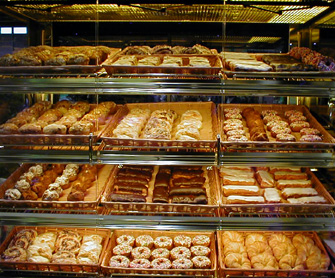
Consumer Interest in Health, Convenience and Localism Fuel $16 Billion U.S. Market for Fresh Baked Goods

Consumer interest in healthy eating, artisan foods and 'localism' countered recessionary pressures and helped fuel the fresh baked goods market to grow 4% in 2009 to reach $16 billion, according to Fresh Baked Goods in the U.S. by market research publisher Packaged Facts.

Total fresh baked goods sales experienced slow but steady growth in the 2%-4% range throughout the 2005-2009 period, with the exception of 2008 when the market saw almost 6% growth. Fresh baked goods sales from in-store bakeries including those of warehouse clubs also experienced steady growth, in the 2%-5% range, reaching $11 billion in 2010 and comprising nearly three-quarters of the total retail market.

Packaged Facts projects that the market for fresh bakes goods will exceed $20 billion by 2014.

Packaged Facts divides the fresh baked goods market into two major product classifications: sweet baked goods and breads. The sweet baked goods classification encompasses cakes, cupcakes, cookies, pies, brownies and other baked dessert products. The breads classification encompasses bread (including sliced and unsliced loaves), rolls, pitas and croissants. This report also discusses breakfast baked goods (which overlap both classifications), including doughnuts, muffins, breakfast breads, bagels/bialys and sweet rolls.

"Although fresh baked goods are produced and sold in a wide variety of retail channels, certain overriding trends have affected how these products are marketed across most channels," says Don Montuori, publisher of Packaged Facts. "For example, consumer demand for specific kinds of products such as those that fill specific dietary needs or budgetary concerns has led retailers to adapt in terms of both product offerings and marketing strategies. In the fresh baked goods market, those bakeries that have managed to succeed in this challenging environment have done so by evaluating and quickly responding to these shifts in consumer demand with products that fulfill a variety of consumer needs and wants."

A new report from Packaged Facts, Fresh Baked Goods in the U.S. offers a comprehensive look at the overriding trends in the market. The report examines baked goods that are prepared fresh at both in-store and stand-alone bakeries, using preparation methods such as made-from-scratch, mixes, par-baking (or pre-baking) and thaw-and-heat. It also analyzes trends in the key retail channels through which baked goods are sold) both stand-alone bakeries and in-store outlets (including traditional supermarkets, supercenters/mass merchandisers, natural food stores, and warehouse clubs. Additionally, the report examines activity at the foodservice level, where trends in baked goods often start, focusing on high-growth areas including bakery cafes.

More>>

Thursday, September 2, 2010

Value Pricing Breakfast Menus Helps Steady Daytime Restaurant Spending, Bodes Well for Future Growth

The most important meal of the day continues to face short-term challenges related to the recession, but market research publisher Packaged Facts' Breakfast Trends in the U.S. Foodservice Market predicts consumer spending on breakfast at restaurants will rebound from an anticipated downturn in 2010 to approach $38 billion in 2011, as current value menu pricing strategies influence future spending habits.

Fast food and QSR (quick-service restaurant) operators are playing the - price equals value - card for everything it's worth. By pushing the envelope with $1 deals, they risk enabling a pool of -extreme affordability- customers. But the upshot for breakfast is that it remains a relatively untapped daypart, so that traffic gained today may translate into additional revenue tomorrow, says Don Montuori, publisher of Packaged Facts. We believe that decisions by the likes of Denny's and Bob Evans to place everyday value for quality food at the forefront of their branding initiatives make a great deal of sense. Value pricing meets the reality of today's and tomorrow's lower-to-middle and middle-income consumers who frequent family restaurants. For breakfast, they are spinning full-service value menus and value in portion size.

Packaged Facts expects McDonald's foray into $1 breakfast menus to create pressure among other fast food/QSR players to match its lead an industry-wide trend previously glimpsed with the proliferation of non-breakfast $1 value menus. Burger King, Wendy's and Subway have already made major breakfast moves. The bottom line is that low cost resonates with restaurant breakfast users, with 31% of respondents to Packaged Facts' proprietary survey claiming they have been influenced by a maximum $3 price when selecting a restaurant for breakfast, versus 16% who placed a limit at $10.

Convenience influences consumer breakfast decisions, with convenience to work or errands, routine, and the need to get somewhere else quickly factoring in. Also relevant are breakfast menu features, such as getting a favorite menu item, wide variety, and healthy menu items. And, because more than half of U.S. adults drink coffee, restaurants have created value bundles that offer coffee with breakfast food to increase foot traffic.

Even though restaurant sales fell during the recession and initial recovery, breakfast has fared relatively well and has taken market share away from both the lunch and dinner dayparts. Packaged Facts found that only 34% of restaurant goers had eaten breakfast at a restaurant in the past month and an even smaller percentage of the general population said the same, which means the industry has an opportunity to woo the more than 150 million adult consumers who do not use restaurant breakfast.

Breakfast Trends in the U.S. Foodservice Market provides unique insights into consumers' evolving relationship with the breakfast daypart, helping restaurant operators position their brands and menus for consumers in 2010 and beyond. Highlights of the study include directional consumer behavioral and attitude analysis via Packaged Facts' proprietary Consumer Restaurant Outlook Tracker; proprietary analysis of average meal spend by restaurant type and by daypart, with a focus on the breakfast daypart, to help target consumers who can bring in higher guest check averages; restaurant and menu selection analysis, driven by Packaged Facts' proprietary consumer survey results; and much more.

More>>

Wednesday, September 1, 2010

Gay and Lesbian Consumers Gateway to Post-recession Business Success

The expanding gay and lesbian population is providing marketers the opportunity to pick up some post-recession business, a new market research study from Packaged Facts says. The study, titled The Gay and Lesbian Market in the U.S., shows that today's 15.7 million gay and lesbian consumers are more optimistic than other consumers about the overall direction of the country, future economic growth, the job market and their own personal financial condition. This basic sense of optimism prevailing among gay and lesbian consumers suggests that they are more willing than other consumers to spend on products and services in the wake of the most severe economic downturn in 70 years.


The report currently estimates the purchasing power of gay and lesbian consumers at $743 billion but is expecting this market to grow 23% to $900 billion as the population grows to 16.4 million in 2014.Retailers in major metropolitan areas, such as New York, will see much of this good fortune due to higher number of gays and lesbians living in the area. For example, New York currently ranks first among the top fifteen gay and lesbian metro areas and claims $52 billion of this cohort's disposable income.

Metropolitan or otherwise, marketers will be interested to know that when deciding whether to stick or switch from a product or service, gay and lesbian consumers are highly alert to the perceived gay-friendliness of companies. Survey data from the report shows 32% gay men and 25% of lesbians have switched products or service providers because they found a competing company that supports causes that benefit the LGBT community. Furthermore, nearly 60% in this cohort report being 'more likely' to purchase everyday household products and services from companies that market directly to gays and lesbians.

More>>

Monday, August 30, 2010


Demographic Trends

As the economy slowly recovers from the recession depths of 2008 and 2009, marketers and market researchers differed sharply over whether the price-conscious consumer who dominated the marketplace during the Great Recession would prove to be a temporary aberration or a permanent fixture in the American economy.
New Research:The Gay and Lesbian Market in the U.S.: Trends and Opportunities in the LGBT Community, 6th Edition
Report CoverThe expansion of same-sex marriage and other forms of civil unions over the past decade is triggering an increase in the visible numbers of gay and lesbian family households and consequently an expanding market space for consumer goods and services of all kinds.
Survey research shows that gay and lesbian consumers are more optimistic than other consumers about the economy and personal finances, indicating that gay and lesbian consumers are more likely to amp up discretionary spending on products and services in the wake of the recession.
This completely new 6th edition of Packaged Facts Gay and Lesbian Market in the U.S. provides marketers with the analysis and insights they need to help them succeed in a consumer segment whose buying power is fast approaching $800 billion.
More Information:
Info   |   Table of Contents

 The Post-Recession Consumer in the U.S.
Report CoverThis Packaged Facts report sifts through five years of data to follow the twists and turns in consumer confidence before, during and in the immediate aftermath of the most severe economic downturn in 70 years.
The report contrasts the attitudes and behavior of consumers on the highest end of the Consumer Confidence Index of the Experian Simmons NCS (“Confident Consumers”) with those on the lowest end (“Anxious Consumers”). By doing so, it sheds light on the conflicted mindset of consumers as the recession loses its grip and suggests how marketers might respond to their customers in an uncertain post-recession economic environment.
The Post-Recession Consumer in the U.S. provides in-depth insights into trends affecting the post-recession environment in key areas such as price sensitivity and use of premium brands and highlights key opportunities in the post-recession consumer market. Subsequent chapters offer an in-depth view of how Confident and Anxious Consumers shop in supermarkets and drugstores and how they behave when shopping for the home also included is data on how they spend leisure time and their behavior in the fashion and automotive sectors.
More information:
Info   |   Table of Contents

The African-American Market in the U.S., 8th Edition
Report CoverWith a population of 40 million and buying power approaching $1 trillion in 2010, African Americans are a key segment in an American economy that increasingly depends upon the needs and preferences of multicultural consumers.
Packaged Facts' new market study, The African-American Market in the U.S., 8th Edition, analyzes the forces shaping the purchase decisions of African-American shoppers and sheds light on key areas such as how black consumers decide where to shop and what influences them while they are shopping.
Special Features Include:

  • Assessment of the trends shaping the African-American market with an emphasis on opportunities available to marketers.

  • Financial forecast of buying power held by African Americans through 2014 and detailed demographic profiles of the African-American population.

  • In-depth examination of attitudes and behavior of African-American shoppers as it applies to food, clothes, drug-store items and home electronics and furnishings.

  • Unique perspective on the shopping behavior of affluent African Americans consumers.
More information:
Info   |   Table of Contents

Wednesday, August 25, 2010

Chocolate Market in the U.S.: Trends and Opportunities in Premium, Gourmet and Mass Chocolate Products : Packaged Facts

Chocolate Market in the U.S.: Trends and Opportunities in Premium, Gourmet and Mass Chocolate Products : Packaged Facts: "The U.S. chocolate market is a mature, differentiated and exacting market, which makes distinguishing yourself a challenge to marketers of chocolate products. Packaged Facts’ new report, The Chocolate Market in the U.S.: Trends and Opportunities in Premium, Gourmet and Mass Chocolate Products examines the current state of the industry and how the market will evolve over the next five years.
Chocolate marketers today are drawing inspiration from other segments of the food and beverage industry in an effort to boost sales - witness chocolates that feature super fruits, functional ingredients, savory touches and ethnic flavors. And chocolate product trends that worked in the past - single-source cocoa, high cocoa content, for example - may not be effective techniques for driving sales in the future.
Written by veteran chocolate market analyst Curtis Vreeland, The Chocolate Market in the U.S. looks at the myriad factors affecting chocolate retailing and consumption. For example, the report examines:

--What impact has the recession had on this $17.3 billion industry?
--How has product development changed to reflect evolving consumer taste buds and budgets?
--What constitutes “premium” and “gourmet” products in the chocolate market today?
--Have consumers changed their buying habits in the face of economic uncertainty?"


http://www.packagedfacts.com/Chocolate-2505082/

Tuesday, August 24, 2010

Chocolate Food Gifting - An American Staple

During the first half of 2010, holiday food gift sales increased from the previous year, indicating a promising year of growth in this sector. A rising interest in gourmet, natural/organic and specialty demographic food gifts (food gifts for kids, food gifts for sports fans, ethnic food gifts, etc.) is fueling demand.

Gift-boxed chocolates remain a mainstay of the food gifting market in the United States, with sales totaling $227.4 million in 2008 and $223.3 million in 2009, a 1.8% decrease.

The continuing expansion of the market for food-gifting is remarkable in that it comes at a time when Americans are reducing spending on gifts overall. Food gifting combines practicality (a consumable item and one that does not require an intimate knowledge of the recipient's lifestyle, needs or tastes). Although clothing remains the most popular Christmas holiday gift, it is also the most likely item to be returned.