Packaged Facts, a division of MarketResearch.com, publishes market intelligence on a range of consumer market topics, including consumer goods and retailing, foods and beverages, demographics, pet products and services, and financial products. Packaged Facts also offers a full range of custom research services. To learn more, visit www.packagedfacts.com.
Search This Blog
Friday, March 18, 2011
60 Is The New 50! Health and Wellness #1 Priority for Americans 50+
Friday, February 4, 2011
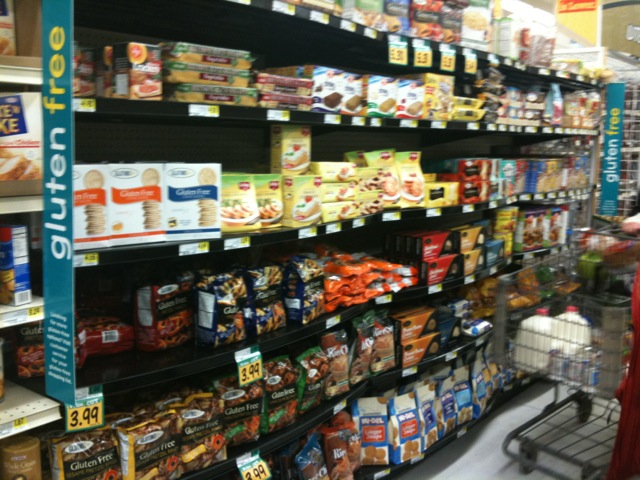
Gluten Free Gone Mainstream?
Going “mainstream” for gluten free foods may have a different meaning for everyone. For restaurants, it may just mean putting together a gluten free menu (regardless of education), for grocery stores it may mean putting it in the main aisles (and the employees know what you’re talking about if you ask them a question), but for me it’s all of the above and more — including a good basic public awareness on what it really means.
That could be the case if new product survey which looks ahead a few years is accurate. According to a news release for “Gluten-Free Foods and Beverages in the U.S., 3rd Edition” by market research publisher Packaged Facts, the gluten-free market is currently a $2.6 billion dollar industry. It reports it will likely double to about $6 billion by 2015! $6 billion is similar to the current industries of Yoga, Halloween, and Potato Chips! What’s more mainstream than Halloween and potato chips (well maybe not together). But even if you look at Yoga, I think one might consider that when it started as a fitness regime in the US, it wasn’t considered mainstream and look where it is today!
Could gluten-free food be the next Yoga?Well, that answer remains to be seen– but the survey showed, “The #1 motivation for buying gluten-free food products is that they are deemed healthier than their conventional counterparts.” Don Montuori, publisher of Packaged Facts is quoted in the release, “…there is evidence suggested that eliminating gluten from the diet may relieve autism in children and adult rheumatoid arthritis. Add to that the healthy ‘aura’ some consumers have attached to gluten-free products, and you create a demand for these foods and beverages that mainstream food manufacturers and retailers are increasingly happy to satisfy.”
People are buying gluten-free to treat celiac, autism or some other ailment but also as a healthy kick to their diet. I do think the healthy gluten-free “fad” has benefited those in the celiac world– not so much with education regarding a correct gluten-free diet, but rather in selection for foods for us.
![]() |
| Gluten Free Section at Cub Foods, Blaine, MN |
Do you think it’s on its way to being as mainstream as other $6 billion dollar industries: Halloween, potato chips or Yoga? Feel free to comment below! My take? I think we’ll know it’s mainstream when all schools get behind it as a legitimate healthy diet that people should be able to choose and that it’s worth paying for. Many schools are coming along, but it is very far from being mainstream.
Let’s keep watching over the next few years!
Friday, January 14, 2011
Study: Modest Growth in Pet Supplement Sector
Growth
of pet supplement and nutraceutical treat sales in the U.S. stalled in
2010, but the category is expected to gradually pick back up in the next
five years, according to a report released today by market research
publisher Packaged Facts.“As the economy improves, so should all things pet, but that recovery continues to appear modest,” said David Lummis, senior pet market analyst for Packaged Facts. “Spending on supplements will increase, but restraint will likely continue to characterize how pet owners shop and what they buy during 2011 and even 2012, making value appeals based on pet health, safety, professionalism, practicality, and yes, pricing, more important than ever.”
From 2006 to 2010, sales of pet supplements and nutraceutical treats grew at a compound annual growth rate of about 4 percent, to reach $1.2 billion in 2010, according to the report.
Following zero overall growth in 2010, Packaged Facts forecasts U.S. retail sales of pet supplements and nutraceutical treats to begin to pick back up in 2011, with the annual sales gains regaining steam through 2015. By this account, the annual percentage increases will rise from 2.4 percent in 2011 to 6.5 percent in 2015, lifting sales to approximately $1.6 billion in 2015, according to the report.
Packaged Facts anticipates growth to be considerably faster on the small animal side, which includes dogs, cats, birds, small mammals and herps, than on the equine side, with the compound annual growth rates coming in at 7.4 percent and 2.2 percent, respectively. As a result, small animal is expected to account for 58 percent of the market by 2015, up from 52 percent in 2010.
Thursday, January 13, 2011
Health, Budget Concerns Will Drive Food Flavor and Ingredient Market in 2011
New York, January 11, 2011 — Consumer thriftiness and health-consciousness will continue to exert a notable influence over the food and beverage ingredient and flavor trends to emerge in 2011, according to Food Flavors and Ingredients Outlook 2011, the eighth edition of the annual series by market research publisher Packaged Facts.
"Heading into 2011, consumers are growing evermore weary of economic and nutritional health gloom and doom. Many have spent the last few years reinventing their financial and employment lives, and are now starting to focus more emphasis on their overall wellbeing and happiness in a way that is reflective of their values, being more pragmatic and deliberate in making decisions about how to spend both their time and their resources," says Don Montuori, publisher of Packaged Facts.
Packaged Facts believes food marketers, from the retail and foodservice sectors, will take that consumer mindset to heart in 2011. Some of the key trends Packaged Facts forecasts to hit it big in 2001 are:
-
Flavors From Around the Globe – Ethnic food will remain a bright spot for foodservice and retailers, providing variety and interest without taxing smaller food budgets. The growing presence of food trucks, with their varied ethnic fare at reasonable prices, will bring this national trend home to the local level.
-
Sustainability Trumps Local, Organic and Natural – Local, organic and natural foods will more often be connected with eco–friendliness and a more holistic lifestyle approach to eating that promotes sustainability. As a result, Packaged Facts predicts that there will be greater use of natural, organic, local and antibiotic and hormone–free ingredients at quick serve restaurants (QSRs) and fast casual restaurants in 2011. At retail, the popularity of private label organic products is anticipated to continue while growth in directly marketed local and organic produce, meats and locally processed foods sold via farmers’ markets and community-supported agriculture (CSA) is anticipated.
-
Wellness Overhaul – Packaged Facts anticipates that food will get more attention as the foundation of health, and wellness activities will be better integrated into overall lifestyle. Growing recognition that digestive health is a key link in promoting overall good health will help drive sales of yogurt and other foods containing probiotics, but gluten-free foods will likely show signs of slowing down after a year of explosive growth that some might consider to be a fad.
-
Plethora of Produce – Vegetables, more so than fruit, will take on added importance in 2011 as they move to the center of the plate. More fine–dining restaurants are starting to focus on vegetables as the main attraction, with either no accompanying meat, or used sparingly, as a condiment to accentuate flavor. Look for considerable menu experimentation with taste palates developing to savor a broad array of produce, with the likes of turnips, parsnips, black and purple kale, broccoli, spigarello, Romanesco, eggplant, celeriac, and sunchokes becoming more commonplace.
-
Flavor & Ingredient Crossovers – A key trend will be even more two–directional crossover of savory ingredients into sweet foods and sweet ingredients into savory foods. For example, Packaged Facts expects the use of olive oil to extend into a wide range of desserts and sweet goods including ice cream and gelato, cake and muffins.
-
Satisfying Sweets – Packaged Facts anticipates that agave will surrender some of its sweetening prominence to less exotic but always special honey as stevia still gains ground at a slower pace. Figs, pears, cherries and blackberries look likely to be the most popular fruits, along with the superfruit combination of blueberry and pomegranate. America’s appreciation of artisanal and retro desserts is expected to continue in 2011 with home–made pie and ice cream showing a great deal of creativity.
Food Flavors and Ingredients Outlook 2011, 8th Edition highlights predictions for the key drivers that will affect the U.S. food and beverage industry including rising food prices, consumer desire to take control and remain tight–fisted, actual vs. perceived thrift, government and industry pressure for a healthier diet and more focus on pragmatic lifestyle choices to promote happiness and well being. For further information, please visit: http://www.packagedfacts.com/Food-Flavor-Ingredients-2706877/.
About Packaged Facts—Packaged Facts, a division of MarketResearch.com, publishes market intelligence on a wide range of consumer market topics, including consumer goods and retailing, foods and beverages, demographics, pet products and services, and financial products. Packaged Facts also offers a full range of custom research services. To learn more, visit: www.packagedfacts.com. Follow us on Facebook, LinkedIn and Twitter.
###
Sales of Pet Supplements for Dogs and Cats Not Recession Resistant, but Nevertheless Resilient
"As the economy improves, so should all things pet, but that recovery continues to appear modest," says David Lummis, senior pet market analyst for Packaged Facts. "Spending on supplements will increase but ‘restraint’ will likely continue to characterize how pet owners shop and what they buy during 2011 and even 2012, making value appeals based on pet health, safety, professionalism, practicality, and yes, pricing, more important than ever."
Packaged Facts estimates total U.S. retail sales of pet supplements and nutraceutical treats at more than $1 billion in 2010, reflecting a compound annual growth rate (CAGR) of 4% during the five–year period beginning in 2006. Sales growth stalled in 2009 and 2010 as the recession took hold and held on, a slow–down attributable almost entirely to a downturn on the equine side. As a result, the small animal category–including products for dogs and cats–gained ground between 2006 and 2010, increasing from 45% to 52% of the market and surpassing equine as the larger category last year.
U.S. retail sales of pet supplements and nutraceutical treats are expected to begin to pick back up in 2011, with the annual sales growth regaining steam through 2015. By this account, the annual percentage increases will rise from more than 2% in 2011 to almost 7% in 2015, lifting sales to an estimated $2 billion. Growth will be considerably faster on the small animal side than on the equine side. For both animal classifications, the pace will be faster in nutraceutical treats, which will continue to gain ground because of their indulgence advantage and a steady influx of more heavily marketed products. Ultimately, small animals will account for 58% of the market by 2015.
Pet Supplements and Nutraceutical Treats in the U.S., 3rd Edition segments the market into two categories–supplements and nutraceutical treats (i.e., those containing supplements or novel botanical ingredients addressing specific health conditions, such as glucosamine for joint health)–with a primary focus on products for dogs and cats, but also extending to horses and other types of companion animals including birds, small mammals, and reptiles. The report provides a forward–looking examination of the market from every angle, including breakouts by supplement type and retail channel, analysis of the complex and evolving regulatory situation, competitive structure and marketing trends, new product tracking, and consumer profiling. For further information, please visit: http://www.packagedfacts.com/Pet-Supplements-Nutraceutical-2588715/.
About Packaged Facts —Packaged Facts, a division of MarketResearch.com, publishes market intelligence on a wide range of consumer market topics, including consumer goods and retailing, foods and beverages, demographics, pet products and services, and financial products. Packaged Facts also offers a full range of custom research services. To learn more, visit: www.packagedfacts.com. Follow us on Facebook, LinkedIn and Twitter.
Friday, September 10, 2010
Novel fibers to grow 750% as consumers seek fiber-rich foods
The use of novel fibers in food products is set to sky-rocket over the next few years, with growth of 750 percent predicted, according to a new report from Packaged Facts.
Consumer interest in dietary fiber has been growing with scientific studies linking increased intake to reduced risks of cancers such as colorectal and cardiovascular disease, digestive health benefits and weight management.
A 2008 International Food Information Council survey found 77 percent of people are proactively trying to consume additional fiber.
Despite such good intentions, however, many Americans only achieve about 50 percent of their recommended amount of 25 to 30 grams of fiber daily.
And such stats are driving the introduction of new fiber-fortified food and beverage products, according to a new report Fiber Food Ingredients in the U.S.: Soluble-, Insoluble- and Digestive-Resistant Types by market research publisher Packaged Facts.
While interest in all types of fibers – insoluble and soluble – is expected to increase, the biggest growth is expected for so-called novel fibers. Packaged Facts defined novel fiber as “one that has not historically been viewed as a fiber food ingredient. This includes, but is not limited to inulin, FOS, GOS, resistant maltodextrin and soluble corn fiber.”
“Packaged Facts determined that sales of all fiber food ingredients (i.e., conventional, insoluble-type fibers; conventional, soluble-type fibers; and novel fiber food ingredients) will continue to increase indefinitely, as the market for fiber-enhanced foods is still in its infancy,” said Don Montuori, publisher of Packaged Facts.
“There is a great deal of room for growth across almost all food categories, which presents an opportunity for the many different fiber ingredients that are among the most popular with today’s food formulators,” added Montouri.
Novel growth
The market researcher is predicting a significant growth for these novel fibers, with the category predicted to increase its share of the market by more than 750 percent, jumping 35 percentage points from an almost 5 percent share in 2004 to a 39 percent share in 2014.
Packaged Facts estimates that in 2004, 91 percent of all fiber food ingredient sales were of conventional, insoluble-type fibers, which contains cellulose, hemicellulose and lignin and cannot be dissolved in water.
The remaining 9 percent share was split evenly between conventional, soluble-type fibers and emerging, novel fibers. The market researcher projects that insoluble fibers will decrease to 53.3 percent by 2014, while the share for the mostly new or newly refined conventional, soluble-type fibers will decrease slightly to 7.4 percent.
Soluble versus insoluble
Studies have also reported that insoluble fiber may reduce the risk of obesity and diabetes, but the biological mechanism underlying the benefits has only been assumed.
The assumption was that the fiber reduced the glycemic response (a rise in blood glucose), thereby increasing satiety and decreasing energy intake. A lower glycemic response decreases the demand for insulin, therefore reducing the risk of type 2 diabetes.
In Europe and Japan, soluble fiber has the greater market share than insoluble. In the US, where the entire fiber market was worth $192.8m (€151.0m) in 2004, insoluble fiber dominates the market with $176.2m (€138.0m), and $16.6m (€13.0m) soluble.
But while Frost and Sullivan predicts overall growth in the US to $470m (€369m) by 2011, the soluble fiber sector is expected to increase by almost twice the compound annual growth rate (CAGR) compared to insoluble fiber - 26.3 percent compared to 13.1 percent.
The arrival of multinationals
Data from Datamonitor in 2009 indicated that food manufacturers are increasingly adding fiber to their products, in a move described as going “back to basics”.
The market researcher said fiber has become an ingredient of choice for products targeting health conscious consumers and products designed to help combat obesity.
Based on data from its Product Launch Analytics, which tracks new products entering the global marketplace, Datamonitor said the percentage of new food products launched in the US that claim to be high in fiber hit 6.3 percent in 2008, up from 5.2 percent in 2006.
“Consumers have long known that fiber is ‘good for you.’ Now food makers are redoubling their efforts to increase the fiber content of many popular food products,” said Datamonitor.
Companies that have launched products touting their fiber content include the multinationals PepsiCo, Kraft, Campbell Soup, Kellogg and Dannon.
More>
Tuesday, August 24, 2010
Weight Management Trends in the U.S.
More »